Showing posts with label New York Times. Show all posts

Sunday, November 30, 2008

Chris Bridges with Dreds?


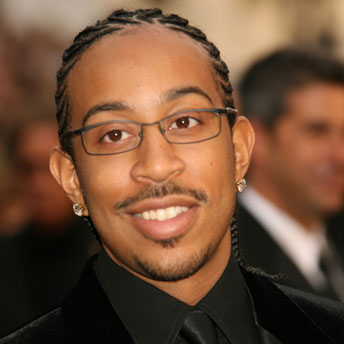
This is obviously not the most important part of my day, but this article has left me a little confused. While a good summary of Ludacris's career and rap persona (although we really should touch on him and Fabolous ruining many a child's Akeelah and the Bee moment), when did he have locs? I remember the braids, but not the locs. I have a feeling he was confused with Busta Rhymes.NY Times, where oh where is your fact checker? Hire me!

A little Ludacris for your viewing pleasure:

While Ludacris has made a mark in film, he hasn't had that memorable television moment yet, and his older videos have some non pg content and Universal Media Group is about their money. Instead a Ludacris clip including Akeelah (Keke Palmer), the boy from the Wire, and somewhere in the middle one of my cousins.

Monday, June 30, 2008

American Girl Movie. A Playlist and an Apology.


-The American Girls (screen shot from http://www.americangirl.com/agcn/index.html)


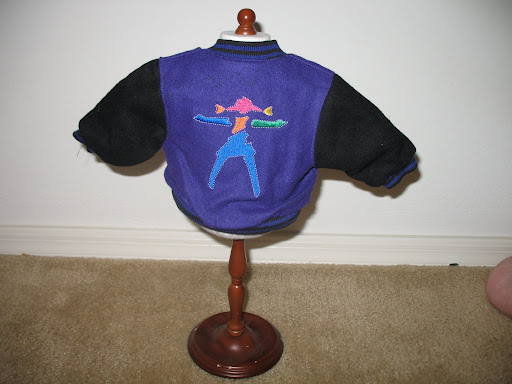
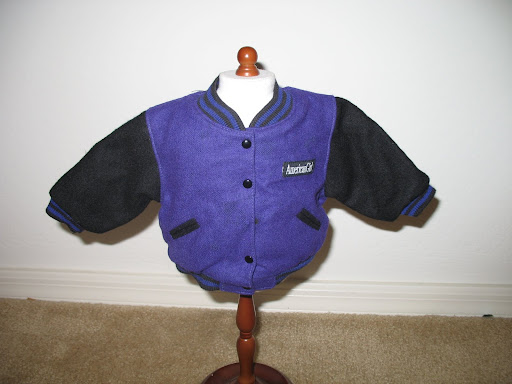
As old as I am, I should not be this excited for the first theatrical release of an American Girl story. Even though I have no idea who this new Kit girl is, I always loved American Girl. As presents when I was little I received the purple and black modern American Girl Varsity Bomber jacket that I rocked hard with my red,green, yellow and blue plaid uniform as well as the starter set of Addy books. At the library I read through all the books in each series, gaining knowledge about American history as I went. I also collected American Girl trading cards and I still have some sitting on my bookshelf at home along with my Hello Kitty and Spice Girls paraphernalia. My favorite characters were Samantha, the posh Victorian who was friends with dirty and poor Nellie; Molly with her 40s charm that prompted me to ask my mother if I could pin curl my hair; and of course Addy, the fearless freed slave girl who came to New York and longed for her family to be reunited. Unfortunately I did not connect with Kirsten as much and Felicity was a bit too history book American for me. I got lost after they brought out Josefina, but was happy that they kept doing different eras and slowly added more diversity to the historical sisterhood. I'm still waiting for the Civil Rights Era doll, but I won't hold my breath.
(Imagine this in a kids size...yea, I was styling)

A.O. Scott of the New York Times, describes the film and its importance in this New York Times Article and he does hit on some solid points about the film industry and target audiences. We've seen it with Tyler Perry and the continued success of Mary Kate and Ashley Olsen's pre-NYU empire and all the Disney Channel productions (Lizzie McGuire, Cheetah Girls, High School Musical, That's So Raven, Hannah Montana). Even a Barbie theatrical production a few years ago prompted signs of joy and relief that girls could still partake in the idealism. Even more relief was prompted when Disney announced it would make another cartoon fairy tale, and this time starring Maddy, the black princess from NOLA.* There is an audience that needs films like this and in the hypersexualized culture that we live in, the innocence of being an American girl is something to be desired. Sure we know its not all sugar and spice and everything nice. Life is something more like that's portrayed in crazy movies like KIDS or Thirteen, but people do still want a bit of the fantasy, the escape, and the idealism. NOT a crazy essentialized idealism, but something that's not on the wild and crazy end of the spectrum and not on the Disney Channel. It also can't hurt to have a nice little Depression Era story in this crazy recession.

Of course this is not an end all be all. Coming out of the American Girl franchise its still steeped in ideas of consumerism and promoting good little shoppers and brand loyalty out of American girls who will see the film, dolls in hand and probably dressed in some of the costumes from the catalog. Proper gender roles will still be inscribed and who knows what Abigail Breslin may do in a few years. But still, it has to be better than when my sister was forced to take me to the Spice Girls movie after Saturday School at the old Flatbush Pavillion on Flatbush and 7th Avenue in Brooklyn and my friends and I bought Spice Girls lollipops everyday to get the free stickers that I collected. For that, I apologize Shirley.

Celebrate all it means being a girl:
A Girls Life


*Really Random: Ever noticed how these modern ethnic minority fairy tales are all localized: Mulan was Chinese in China, Pocahantas was Native American in emerging colonial America, and now this black girl is from the South. Understandably Jasmine was from the Middle East, that was based on the Arabian Nights stories. I also do understand why these characters need locations to make their stories work, but I still find it interesting. I wonder if the Grimm Brothers gave locations to Cinderella or Sleeping Beauty.

Saturday, June 28, 2008

Summer Forecast: Sun Showers

AKA Crown Heights, this is not looking good.


The Associated Press (via the NY Times) has reported that 4 black 14 year-olds have been arrested for throwing rocks and yelling racial epithets at a Jewish school bus full of toddlers (See article here). As we've seen both here and here, things have not been shaping up so nicely this summer.
Unfortunately the neighborhood will continue to live under the cloud of the 1991 deaths and riot. Although the storm may have come and gone, apparently there are still showers of racial discord that still have not been properly addressed.

Wednesday, June 25, 2008

When I Grow Up! Revisited.


So it is unlikely that this awesome concierge position will actually be my future. (I have no real future career). But it does remind you of that special time in elementary school when this question is first asked and wide eyed optimistic children respond with the careers that society seems to be based around. You then have a classroom full of doctors, nurses, teachers, police officers, fire fighters, U.S. presidents and hair stylists. However as you get older reality starts to set in, as well as likes, dislikes and your parents desires change those goals and more diverse careers emerge like lawyers,journalists, fashion models, actors, and artists.

At some point when you start college you learn what an investment banker is and that there are these organizations called consulting firms and hedge funds. (Some kids know what they are growing up, but I'm not talking about those privileged ones.) Once again career ideals change and people who once wanted to be a doctor or teacher see the lure of business and venture there. But is there anything inherently wrong with that?(Full disclaimer: I went to the dinners, decided Boston Consulting Group was the only firm I liked, started my cover letter and then remembered I did not really want to do that so never applied.)

The New York Times visits the issue this week in a piece entitled "Big Paychecks or Service." The author discusses the pull on students who once had other goals to enter business fields where they can make loads of money. Usually its a base salary around 60-70 thousand and then tens of thousands of dollars added on in bonuses-serious cash for a 21-23 year old to make on their first job, and a salary that most people in other career fields,say primary education or journalism, spend their careers attempting to earn.

The article does address a huge issue in that many people do lose sight of their larger goals in life chasing money at a young age. I have also seen the torture it wreaks on students in the process. There are countless interviews and math evaluations. You fly around the country so that different offices can determine their approval in the midst of working on your thesis, carrying a full course load, and you are still expected to participate in student life. Students take the leap from "I came here to go back and better my community" to "I came here and want some money so I can ascribe to the lifestyle in front of me, the community will figure it out eventually."But it also ignores the fact that many people also choose this path for other reasons. For one, some people actually have families that need financial assistance and this is perhaps the best way out at the moment. People also have plans for their lives post banking. This often serves as the launchpad for one's own business ideas. Many do go back to working towards their goal and this was simply a fun or necessary financial detour along the way. Similarly, just like young people that go about their grand tour post college, this banking lifestyle is a great way to travel and live in other cities essentially on your jobs dime.


Also there are tons of students that just don't have a clue as to what they are doing post graduation. They flit and flutter around during the summer and find a job that often is not in hard core business. Others do go for further education bettering themselves and building more debt in the process. And still several do reach their original goals simply taking detours along the way. It's not a dichotomy of "we help people" vs. "we help ourselves." Often it's more of a mix and I have heard of quite the fair share of students doing teaching programs just to get the free education masters whether or not they will ever actually use it. Even more, there are some people that actually enjoy the idea of investment banking and consulting and hedge funds and all that business jazz. They love quantitative evaluations

This long ramble was just to say that I found the New York Times article biased. Within the limits of the line or word count I am certain there was a way to take into consideration the other side of the story and not simply paint a wide brush over the students that pick a different route. Maybe colleges should enact more loan forgiveness programs like the ones available at several law schools. Perhaps that would help in the battle.

Sidenote: I did like the point about schools homogenizing their students. While not necessarily in the case of careers, there is a point there.

Monday, June 23, 2008

On the Street|Cinched: Why the New York Times need a clue?

It was the New York times that started the fist bump foolishness. In perhaps the cutest article ever about Barack Obama and his assistant, Reggie Love they spoke of "closed-fist high-fives" to which my friends and I laughed, knowing that they had to be talking about a "pound" or "dap." That was alright New York Times. You just needed a way to express the imagery of the action to the public. Little did you know Michelle and Barack would do it a few days on tv, making the public aware of something they were already aware of (Even the Dalai Lama gives pounds. I've seen pics.)

There was also that random Style article about chipped nail polish that discussed how it was now acceptable to have chipped nails. I convened with friends again. We decided it wasn't and that the article was silly. But then again, London girls think black tights or stocking with holes in the summer is acceptable, so I just may be old fashioned like that.

This past weekend we were graced with Bill Cunningham's "On the Street|Cinhed" audio visual feature. Check it out here.
Now I'm just concerned about my hometown paper.

Things I wonder:
1. Where did they find so many shirtless guys? Sure people go shirtless on their block, and NYC did just have a heatwave, but those dudes were passing a Zara making it one of 4 or 5 locations(that I can think of), and the shirtless is just not that normal. It had to all be at the Puerto Rican Day Parade.

2. Really NY Times? One, this is not new. As Mr. Cunningham pointed out, guys have been wearing baggy jeans for quite some time now. Contrary to popular belief, they often did wear belts with them. There had to be away for the jeans not to completely fall off. Also, I've seen this ridiculousness in Brooklyn for quite some time from baggy to fitted jeans. Top Shottas are Top Shottas everywhere.

3. I'm a fan of relating history to everything. After all I was a history concentrator. The depression connection was a little weak. I'm somewhat doubting that super low rise jeans will come in fashion for men as a way of rationing fabric. It's supposedly going out for women though, so who knows. That along with the graffiti connection and the relevance to hip hop culture should have been developed more. Really, my history tf would have graded you worse than they graded me.

4. White kids do live in the city, not just Long Island, Westchester and the UES (which may as well not be the city). They also adapt to and contribute to these fashion musings. But they are not top shottas. Sorry.

Gawker agrees this is ridiculous.

Hey, New York Times. See how I knew this was all bogus. I could be a real help. Hire me!

H.A.U.L.

Monday, June 02, 2008

I ain't saying nothing, but I'm just saying


....when black people did this, Fred Hampton ended up dead. Let's just hope our friend Al doesn't stir anything up. Because while I, like Spike, am confident in black folk's ability to act rationally, I do not have the same confidence in Al.

People we do not need another long and hot summer to teach us to Do the Right Thing.

Somewhere Sammy is reminding us we can all get along

(p.s. there will always be more Spike loving..I'm doing my dissertation on whiteness in black films. You know he is all up in there)

HAUL,
The Queen

Friday, May 30, 2008

Tyra Banks is Certifiable

Now, I admire her immensely. I do think she is a bit self obsessed, but hey if I had a platform I'd probably relate everyone's problems to my easy going life, so I don't know how much I can blame her. She does make a point though, adversity is a plus in life, it definitely makes you think more. Also, must definitely admire her gusto in her career. But please watch the first few minutes of her New York Times video at the hyperlink since I can't find an embeddable video (http://video.on.nytimes.com/?fr_story=9f58979ebe9bb376d806eb1d3d4f169a8d434521), and tell me it doesn't seem a bit like Chris Crocker.


Still I can't hate, I spent the entire Junior Parents Weekend at school attempting to teach my sister my facial expressions 101.

Thursday, May 22, 2008

Money, It's gotta be the shoes/Crown Heights, again./ What's really hood, Meagan Good?


Back during my obsession with U-N-I's "K.R.E.A.M." and the video, I also did a Throwback special on Spike clips, including the commercials he did with Jordan. Now all love of the Spiz'ike aside, Mr. Lee has been making quite some noise at Cannes. First off is the news that he will be doing a documentary on His Royal Airness, Michael Jordan himself. Peep the Variety article here. Yay, excitement. Think we'll get a little celeb-style gossip about the post-marriage era? I really don't care, but it just may be entertaining. Better yet, do dyou think he can do a Michael Jackson documentary?

But that's not all getting Spike attention. He also has a film coming out this fall that focuses on black soldiers during WWII. He let Eastwood have it for making two WWII films back to back that featured an all white army. I'm not sure what the exact segregation laws were then, but I'm certain there were some black soldiers there. It's a shame that in 2008 the entertainment industry has still not come around to the idea of inclusiveness. New York is not an all white city and the nation is not an all white nation. So while groups of friends and families may be of all one race/class/creed at least be a little representative in the people bumping into them. Read Spike's comments here.

And my requisite New York Times article. Crown Heights. Sigh. Apparently things don't change.

Also, Meagan Good, Vanity? I thought Vanity Fair reserved that for up and coming actresses trying to get noticed. Oh well, guess I answered my own query. Y'all know Cousin Skeeter was a long time ago. But then again, Jurnee Smollet just got her picture and they were both in Eve's Bayou together. And well, apparently Good is a producer now too.

a 3fer, really I should be learning stats.


http://www.variety.com/article/VR1117986150.html?categoryid=13&cs=1&nid=2562
http://ap.google.com/article/ALeqM5hikJlTUDy35zQ7x5J8LpXidpmZhgD90Q2PIO0

Tuesday, April 29, 2008

Bad Boy Bad Boy What You Gonna Do

What you gonna do when they come for you? Yes the COPS theme song needed to be reprised for this post. If you follow this often enough, you know I tend to rely on the New York Times for procrastination and leisure reading, as well as keeping up with what's going on in the world (although there are much better publications for world news).

In the waker of the non-guilty Sean Bell verdict, the New York Times has gotten over the shock that black people in New York are not all the same, and produced an article on some of the work of 100 Blacks in Law Enforcement Who Care. The organization, which is reportedly critical of the NYPD and the justice system, hosts a variety of events including one that teaches young black and hispanic youth how to respond to officers in certain situations. Events like this are great and help to reduce situations where cops are aggravated or fearful for their life. Indeed, in the fear inducing fear of the police officer, there are times when their adrenaline rushes.

Still, as great as it is for non for profit organizations to provide services like this, there must be a greater change in law enforcement itself. Too much of this country's history has been of people learning how to respond to unfair situations, and not enough of it has been truly evaluating situations and looking for ways to improve.

In the chance that you have not already figured out that you should allow cops to punk you, not mention a possible possession of a firearm, and in general just be courteous, people are around to inform you of ways to keep yourself protected. And just in case you are not able to attend one of the sessions by 100 Blacks in Law Enforcement Who Care, just peep this Chris Rock clip. He's a black man from the BK, he knows what's up.


Saturday, April 26, 2008

OH EMM GEE: The Negroes arent All Rioting...and even more...

...they have different opinions.
Hey world. bet you didnt expect to hear from me twice today.

Yes I'm still angry about Sean Bell verdict, but we shall see what hppens in the other avenues..at least a little disciplinary action. Making me angrier is news coverage of the reaction to the verdict. Stories released after the verdict yesterday all made it appear that the only response to a situation like this was a riot. Various accounts reported the surprise that there was no riot...or "no riot as of yet." What a conundrum? To think, people do not treat every case as if it was Rodney King all over again. Surprise Surprise.

Now, the New York Times is reporting that there is a plethora of views amongst the black community in the wake of the situation. Really? Who wouldathunk it? Spread the news black people are not all a monolith. They have different views on different situations.

At least they got one thing down right with this editorial.

Wednesday, March 05, 2008

Happy March! (on Washington, to the White House)

It's Woman's History Month. Excited?

I won't promise loads of commentaries, because we saw what happened when I did that for Black History Month. And then I actually did have a plan (it was really good and had tons of issues). But I will promise to trying to be better about posting despite my busier schedule. February was a shame.

I also won't promise extra special attention paid to women. I know it sounds horrible, but I have to write as the issues come.

However, as we do bridge from one history month to another (and they're not mutually exclusive) I do find this Maureen Dowd New York Times op-ed pretty pertinent. In referencing the two bids for the U.S. Democratic party nomination, Dowd not uniquely positions the race as a battle of two historical guilts. Click Here.
(If you want to escape the elections look at Radar's Misogynistic Movies List.)

What is most interesting about the repeated need to cast this race as a battle between America's (and well the entire western world) various wrongs are the efforts to make one group's pains appear more hindering than the other's. Dianne Feinstein, senior senator from California, is quoted as talking about a "no women need apply" standard and two other people banter in the article about who's ancestors pains were greater. "My ancestors came in chains" says one. The other replies "My ancestors were in chains and on their periods." Who knows why Ms. Dowd chose these comments? (I don't regularly follow her column and don't pretend to know any of her politics.)

The absurdity of these comments does nothing to actually aid the actual issues at the base of the discussion and only inflame zealots. At best they point out the double burden of specific groups over times: If no women could apply, and no Irish could apply in general, then the 19th century was probably a bit more rough than Gangsters of New York could ever portray. Even more if blacks were in actual chains, and women were in metaphoric chains and on their periods, and patriarchy exists across races, black women must have had one bloody ride...eh?

Can injustices be weighed? In some cases yes and in some cases no. Getting a paper cut is different from getting a hand chopped off. But losing you're left eye or your right ear both pose difficulties that are more orange and apples. The women vs. every other American minority case is flawed and in most cases if not always, women (as a general group, but particularly meaning white women) have carried less of the burden than other minorities (in general). Still the issue of who's journey to the gate was easier does not mean anything if neither person is guaranteed access beyond the gatekeeper. An admission through the back door should also not be the accepted concession. This is not to deride gendered spaces (like a sorority or fraternity) but to pause and think about places where the analogy may make sense.

In speaking about the Democratic race, the idea of competing historical wrongs enforces the idea that the election of one or the other will be the saving grace and eradicate that issue.

"As it turns out, making history is actually a way of being imprisoned by history. It’s all about the past. Will America’s racial past be expunged or America’s sexist past be expunged?"-Dowd

NO, it will not. The fact that both Hillary and Barack have gotten this far in the race with Edwards bowing out does indicate that there have been positive changes concerning the isms. It does not however immediately change the way society operates or rewrite the discourses that dictate the way we function.


And to whoever made the comment about the menstrual cycle, that's like Tyra burning her bra even though its 2008 in her breast episode to make some point about ill fitting bras. Stupid.

Haul,
The Queen

Sunday, October 14, 2007

Today's Sunday Times

Peep the article below on the lack of minority models. There's also some interesting features in October's Marie Claire about race and a global trend of ethnic ambiguity and attempts at looking more white. Ebony's September issue also looked at blacks in fashion. Or you could look at this, but spare yourself. BethAnn Hardison, mentioned in this article, has also been hosting some conferences on the topic (The Fashion Bomb has coverage of the last conference). It seems like this is cyclical, but let's hope that changes noted now stand longer. Old news is still new...
Haul,
The Queen

Runways Fade to White

Published: October 14, 2007

IN the days of blithe racial assumptions, flesh crayons were the color of white people. “Invisible” makeup and nude pantyhose were colored in the hues of Caucasian skin. The decision by manufacturers to ignore whole segments of humanity went unchallenged for decades before the civil rights movement came along and nonwhite consumers started demanding their place on the color wheel.

Photograph by Gonzalo Fuentes/Reuters; photo Illustration by The New York Times

THE LINEUP At recent spring shows, black models were scarce or nonexistent, including at the ChloƩ show in Paris, above.

Firstview

FRESH FACE Honorine Uwera was hired for five New York shows, too few to justify a trip to Europe.

Nowadays the cultural landscape is well populated with actors, musicians, media moguls and candidates for the American presidency drawn from the 30 percent of the American population that is not white. Yet, if there is one area where the lessons of chromatic and racial diversity have gone largely unheeded, it is fashion. This reality was never plainer than during the recent showings of the women’s spring 2008 collections in New York and Europe.

Although black women in the United States spend more than $20 billion on apparel each year, according to estimates by TargetMarketNews.com, it was hard to discern an awareness of this fact on the part of designers showing in New York, where black faces were more absent from runways than they have been in years.

Of the 101 shows and presentations posted on Style.com during the New York runway season, which ended a month ago, more than a third employed no black models, according to Women’s Wear Daily. Most of the others used just one or two. When the fashion caravan moved to London, Paris and Milan, the most influential shows — from Prada to Jil Sander to Balenciaga to ChloĆ© and Chanel — made it appear as if someone had hung out a sign reading: No Blacks Need Apply.

“It’s the worst it’s ever been,” said Bethann Hardison, a former model who went on to start a successful model agency in the 1980s that promoted racial diversity.

AMONG the people she represented were Naomi Campbell and Tyson Beckford, the chiseled hunk who broke barriers in the 1990s by becoming the unexpected symbol of the country-club fantasia that is a Ralph Lauren Polo campaign.

“It’s heartbreaking for me now because the agents send the girls out there to castings and nobody wants to see them,” said Ms. Hardison, referring to black models. “And if they do, they’ll call afterward and say, ‘Well, you know, black girls do much better in Europe, or else black girls do much better in New York, or we already have our black girl.’”

Last month in New York, Ms. Hardison convened a panel of fashion experts at the Bryant Park Hotel to discuss “The Lack of the Black Image in Fashion Today,” an event she will reprise Monday at the New York Public Library on 42nd Street. “Modeling is probably the one industry where you have the freedom to refer to people by their color and reject them in their work,” she said.

The exclusion is rarely subtle. An agent for the modeling firm Marilyn once told Time magazine of receiving requests from fashion clients that baldly specified “Caucasians only.”

The message is not always so blatant these days, but it is no less clear. Take for example the case of two young models, one white, one black, both captivating beauties at the start of their careers. Irina Kulikova, a feline 17-year-old Russian, appeared on no fewer than 24 runways in New York last month, a success she went on to repeat in Milan with 14 shows, and in Paris with 24 more. Honorine Uwera, a young Canadian of Rwandan heritage, was hired during the New York season for just five runway shows.

While Ms. Uwera’s showing was respectable, it was not enough to justify the cost to her agency of sending her to Europe, where most modeling careers are solidified.

“We represent a lot of ethnic girls,” said Ivan Bart, the senior vice president of IMG Models, which represents a roster of the commercially successful models of the moment, among them black superstars like Alek Wek, Ms. Campbell and Liya Kebede.

“We have new girls, too,” Mr. Bart added, young comers like Ms. Uwera, Quiana Grant and Mimi Roche. “We include them in our show package, give them the same promotion as any other girl, and get the same responses: ‘She’s lovely, but she’s not right for the show.’”

Although, in fact, Ms. Roche and Ms. Grant, both black, were seen on runways in the last five weeks, the reality was that only one black model worked at anything like the frequency of her white counterparts: Chanel Iman Robinson, 17, who is African-American and Korean. Particularly in Milan and Paris, Ms. Robinson’s was often the only nonwhite face amid a blizzard of Eastern European blondes.

It is not just a handful of genetically gifted young women who are hurt by this exclusion. Vast numbers of consumers draw their information about fashion and identity from runways, along with cues about what, at any given moment, the culture decrees are the new contours of beauty and style.

“Years ago, runways were almost dominated by black girls,” said J. Alexander, a judge on “America’s Next Top Model,” referring to the gorgeous mosaic runway shows staged by Hubert de Givenchy or Yves Saint Laurent in the 1970s. “Now some people are not interested in the vision of the black girl unless they’re doing a jungle theme and they can put her in a grass skirt and diamonds and hand her a spear.”

And some people, said Diane Von Furstenberg, the designer and president of the Council of Fashion Designers of America, “just don’t think about it at all.” Ms. Von Furstenberg herself has always employed models of all ethnicities on her runways. (This September, she hired seven black women, more perhaps than any single label except Baby Phat and Heatherette.) Yet she is increasingly the exception to an unspoken industry rule.

“I always want to do that,” she said, referring to the casting of women of color. “I can make a difference. We all can. But so much is about education and to talk about this is an important beginning.”

But isn’t it strange, she was asked, that she would have to invoke the rhetoric of racial inclusiveness at a time when Oprah Winfrey is the most powerful woman in media, and Barack Obama is running for president?

“Why did we go backward?” Ms. Von Furstenberg asked.

Agents blame designers for the current state of affairs. Designers insist agents send them nothing but skinny blondes. Magazine editors bemoan the lack of black women with the ineffable attributes necessary to put across the looks of a given season.

The current taste in models is for blank-featured “androids,” whose looks don’t offer much competition to the clothes, pointed out James Scully, a seasoned agent who made his mark casting the richly diverse Gucci shows in the heyday of Tom Ford. In today’s climate, it is far more difficult to promote a black woman than her white counterpart.

“You want to sell the model on the basis of her beauty, not her race,” said Kyle Hagler, an agent at IMG. Yet when he sends models out on casting calls based on what he terms a “beauty perspective,” omitting any mention to potential clients of race, “You always get a call back saying, ‘You didn’t tell me she was black.’”

THE reasons for this may seem obvious, and yet the unconscious bigotry is tricky to pin down.

“I’m not pointing a finger and saying people are racist,” said Ms. Hardison, who nevertheless recounted a recent exchange with the creative director of a major fashion label: “She said to me, ‘I have to be honest with you, when a girl walks in, I just don’t see color.’ Meanwhile, they have one girl, or more likely, none in their show.”

Ms. Hardison explained: “‘I don’t see color?’ Does that mean, you don’t want to see?”

There is something illustrative of the entire issue, and the state of the industry, to be found in this September’s Italian Vogue.

Just one image of a black model appears in the issue, midway through a 17-page article photographed by Miles Aldridge and titled the “Vagaries of Fashion.” In it, the glacial blond Anja Rubik portrays an indolent, overdressed Park Avenue princess with a gilded apartment, a couture wardrobe, two towhead children and a collection of heavy rocks. The sole black model in the pictorial is more modestly attired, in an aproned pinafore.

She plays the maid.

Saturday, October 13, 2007

And now for a little Bklyn History

Thanks to the NYTimes. There's a pretty informative article this week about the Underground Railroad and the form it took in Brooklyn, leading to the designation of Duffield, a popular street in Brooklyn's Downtown as Abolitionist Place, "On the Trail of Brooklyn's Underground Railroad." The article also touches on the history of Weeksville, an important historical but oft forgotten neighborhood of Brooklyn. Get edumicated here.

Watch the NYTimes video on the subject here

If you ever want to really get into NYC history on an almost block by block basis, there's this guy that often does specials on PBS. I can't remember his name of the title of the program right now, but they are on point.

On another note, does anyone else feel intrigued by the case of Pinky? yea..

For related reading check out Monied Metropolis by Sven Beckert. It gives everything through an economic history of the city. Quite informative.

Haul,
The Queen